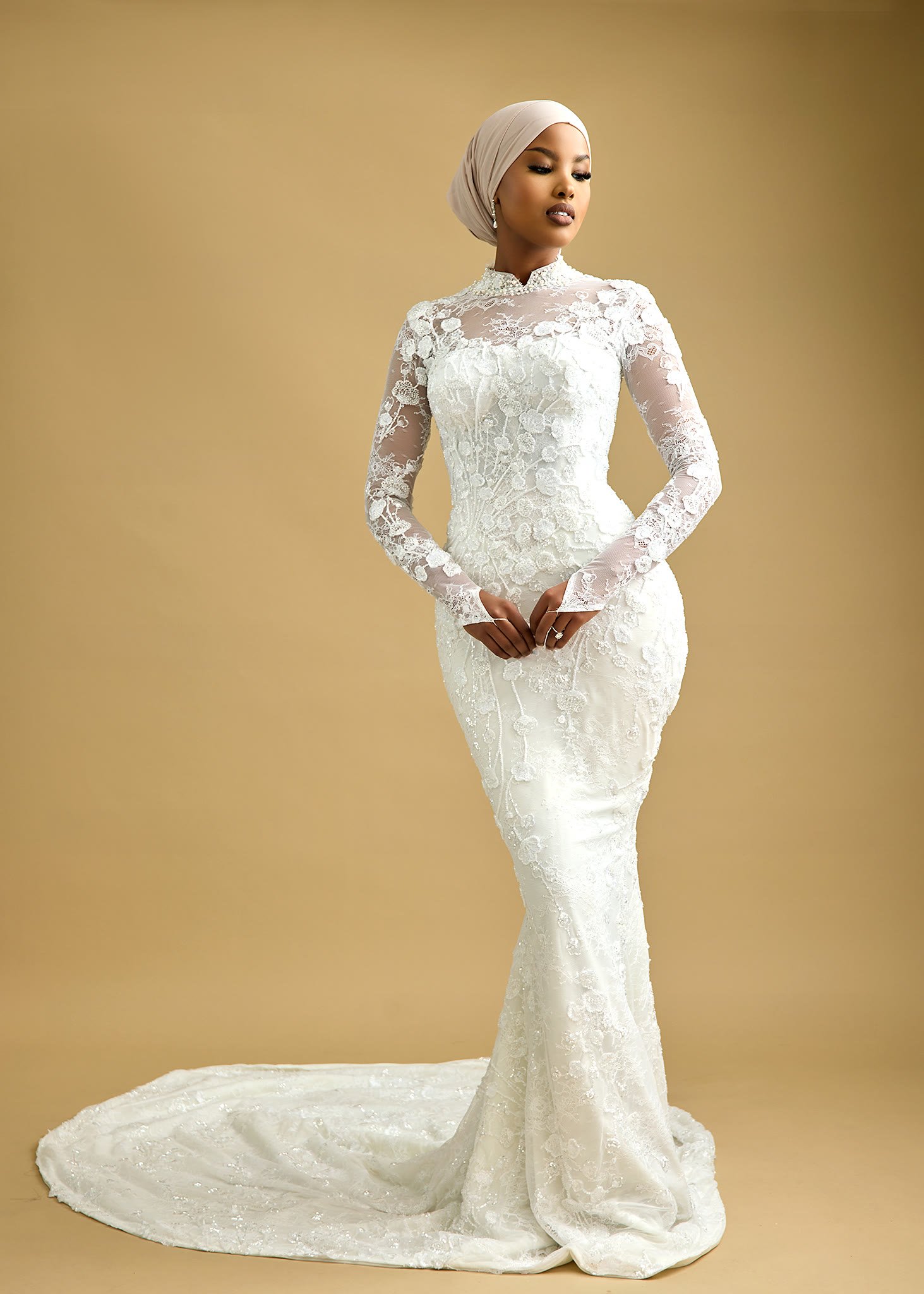
For the bride who wants her shoulders covered, her sleeves long and her line unbroken. The same drafting, the same fabrics and the same hand finishing as every ANSSA commission, drawn to a modest brief from the first sketch.
Coverage does not reduce what a gown can be. It changes what the gown has to do.
When the shoulders, the arms and the neckline are closed, the eye reads line, proportion and surface instead of skin. The cut has to carry the whole design, the fabric has to fall correctly through a longer silhouette, and the detail has to hold its own across more ground. That is a more demanding brief, not a smaller one.
So we treat it as a brief rather than a restriction. The silhouette is drafted to your proportions instead of being adapted from an open pattern with sleeves added at the end. Fabric is chosen for how it falls when it covers. Every seam is finished by hand. The result is modest because you asked for it, and couture because that is how it was made.
Coverage designed in from the first sketch
Proportion drafted to your own measurements
Hand finishing throughout, inside and out
The Silhouette
The Elements of a Modest Line
A modest gown is built from a handful of decisions. Each one is yours to make, and each one changes the whole.
01
Covered Shoulders
The shoulder is where a modest gown is won or lost. Draped chiffon, a structured cap or a full cape sleeve, cut so the line stays clean when you raise your arms.
02
Long Sleeves
Fitted illusion lace, sheer tulle with appliqué set over it, or an opaque sleeve in the gown fabric. Set into the armhole so it moves with the shoulder rather than pulling against it.
03
Higher Necklines
A high neck, a boat neck, or an illusion panel that closes the front while keeping the surface light. Lace is placed so the pattern reads across the neckline instead of stopping at it.
04
Fuller, Longer Silhouettes
A longer skirt, a fuller hem, a train weighted so it follows you rather than trailing behind. Length is a modest decision as much as coverage is.
05
Layering
An overlay, a cape or a second skirt worn over the base gown. Layers give coverage that can be adjusted between the ceremony and the reception without changing dress.
06
Structured Forms
Internal corsetry, boned panels and a defined waist. Structure is what lets a covered gown hold its shape through a long day rather than settling into the body.
07
Flowing Forms
Chiffon, crepe and soft silk cut on generous lines. The opposite approach to structure: coverage through volume and movement rather than through the frame beneath.
The Bridal Edit
Three Readings of the Same Brief
Modest is not one look. These three commissions answer the same brief in three different registers.
01
The Lace Ceremony
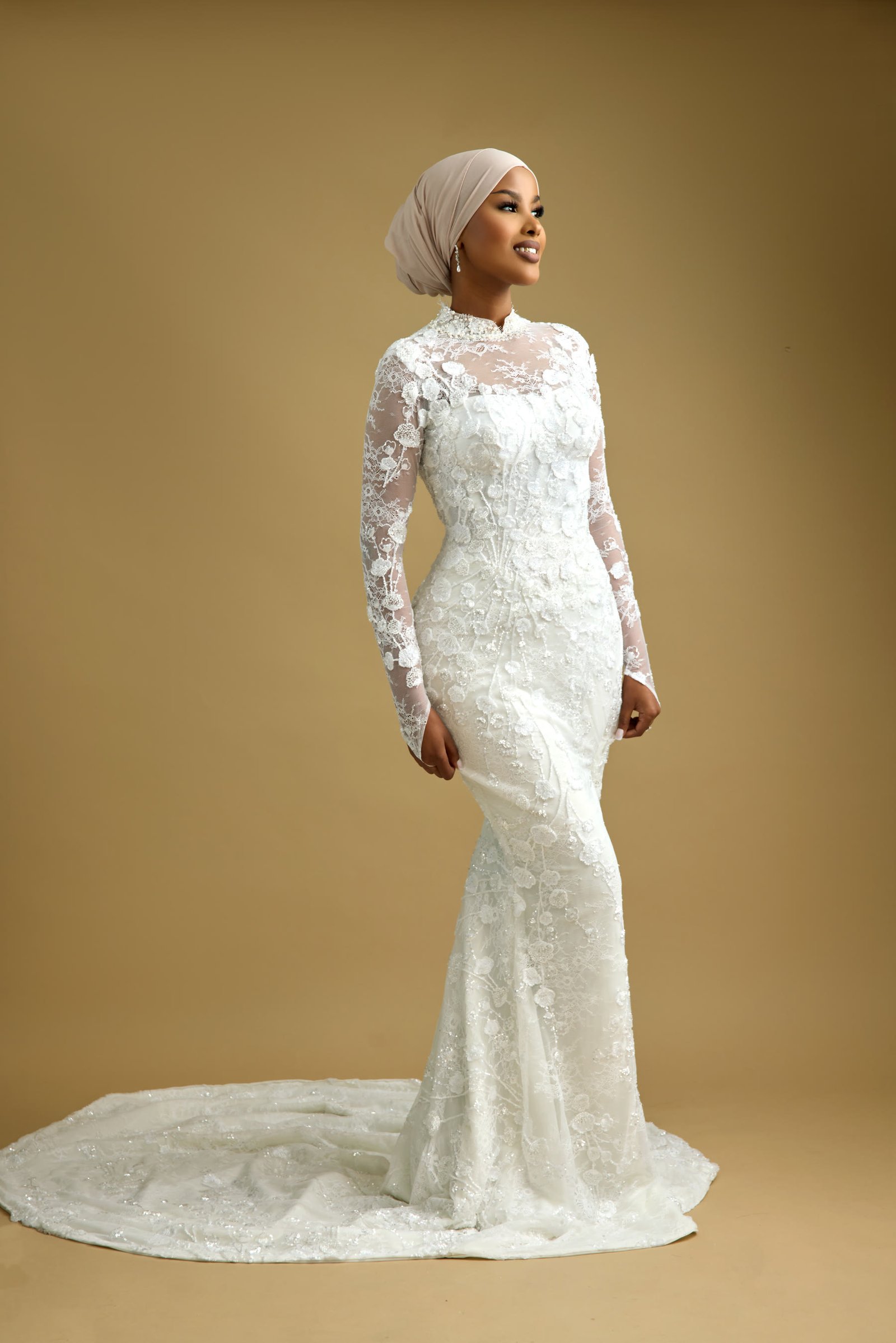
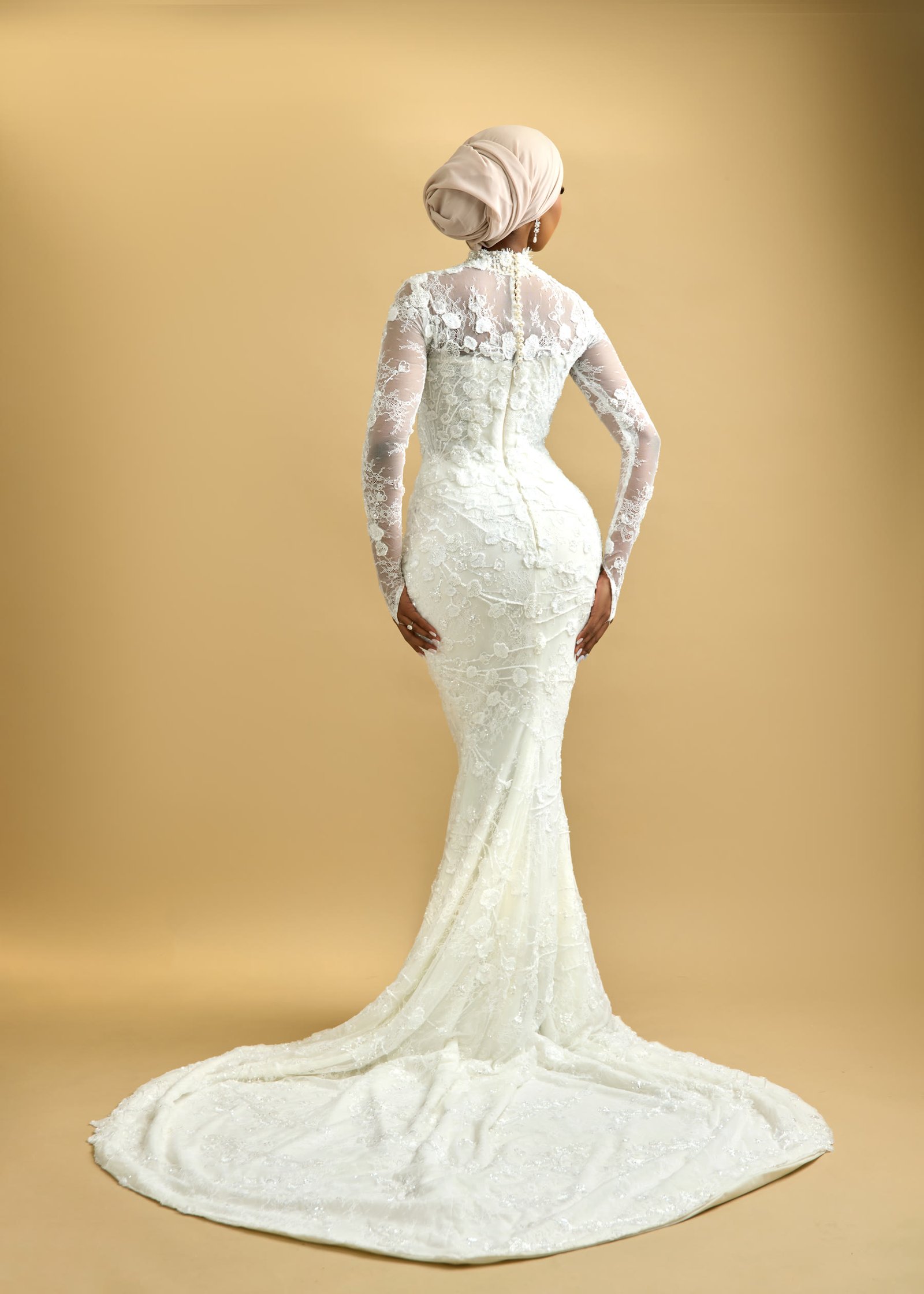
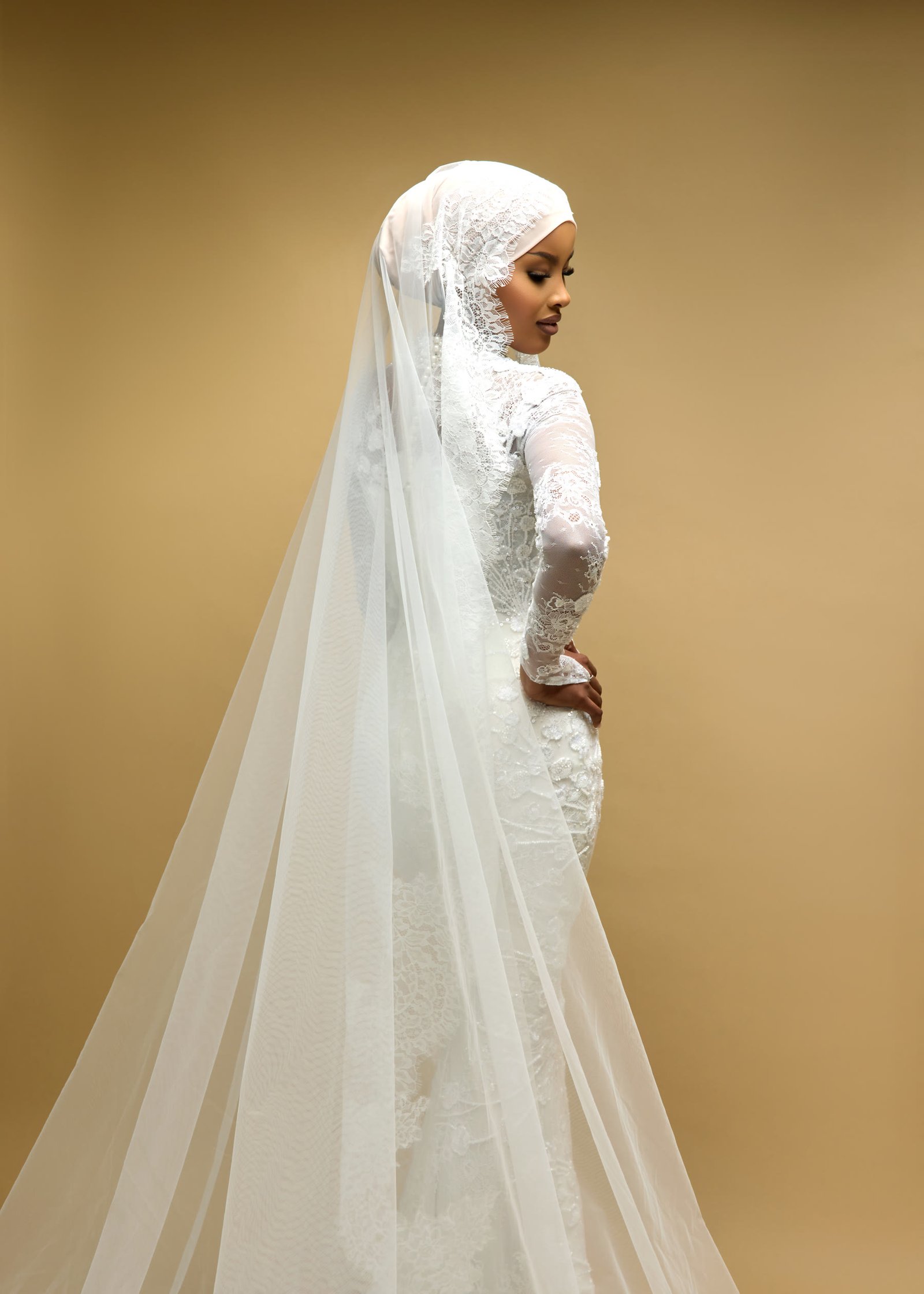
Corded ivory lace over a fitted base, illusion sleeves to the wrist, a high neckline, and a cathedral veil worn over the hijab. The most traditional reading, and the one that photographs the way a wedding is remembered.
02
The Cape Silhouette
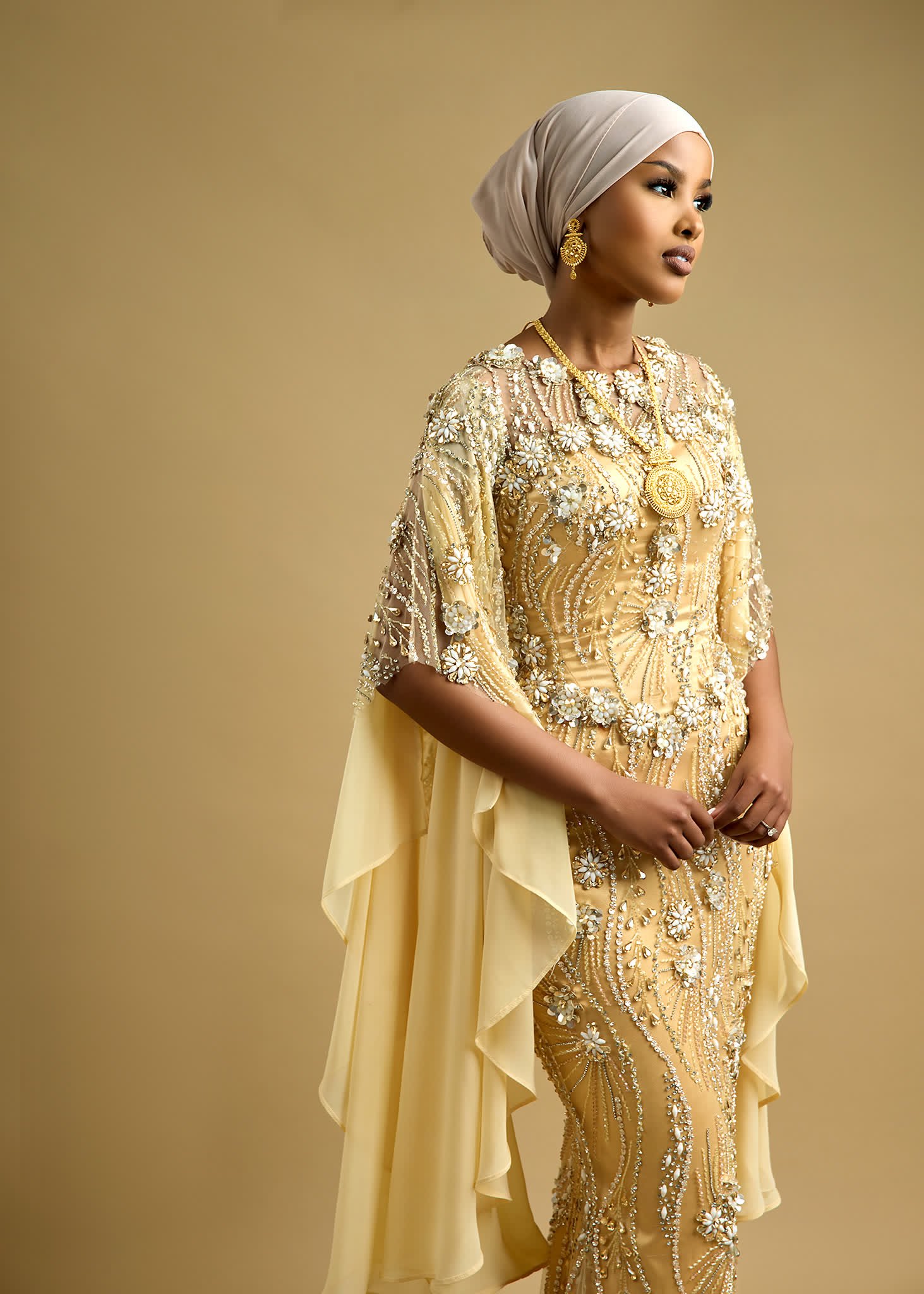
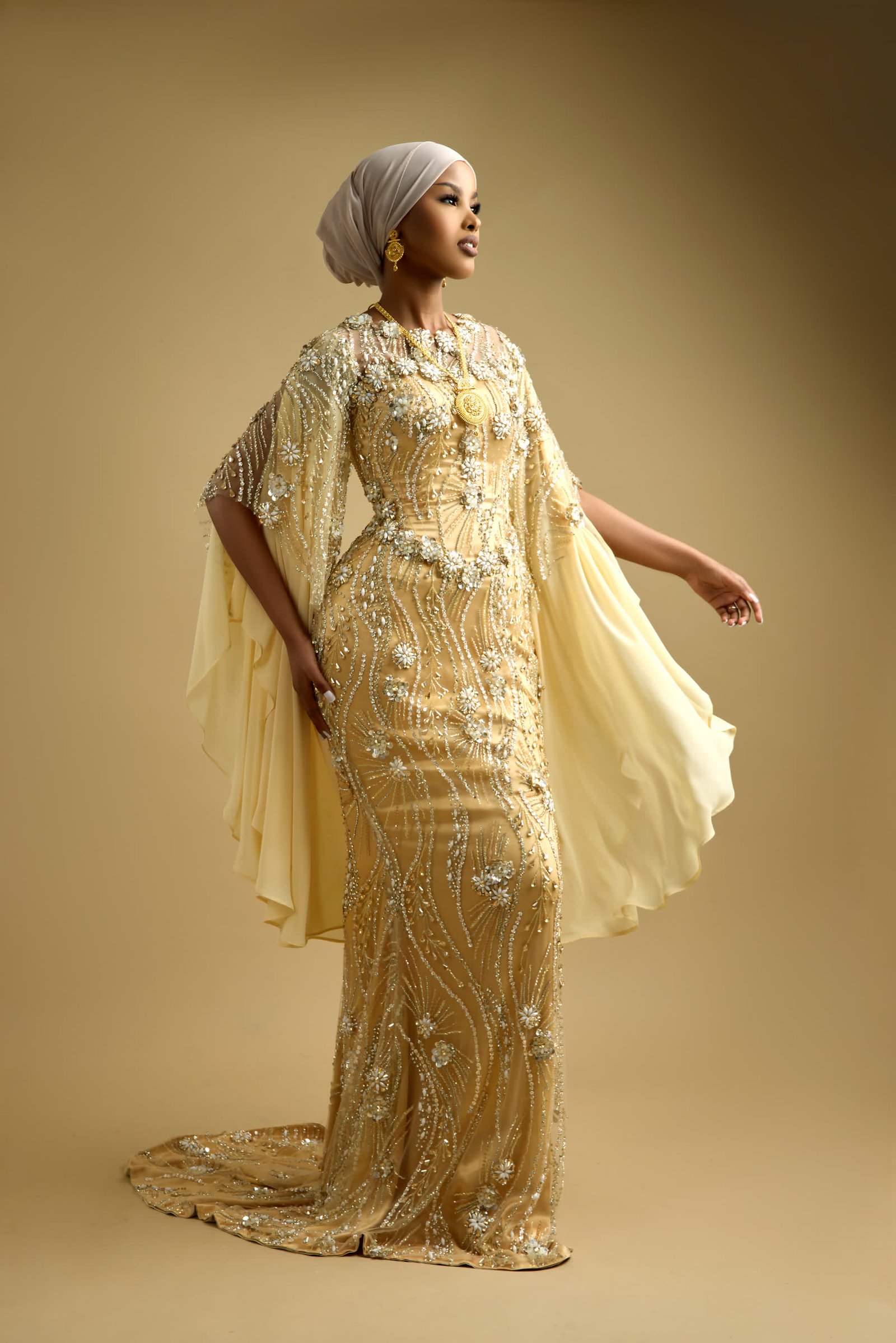
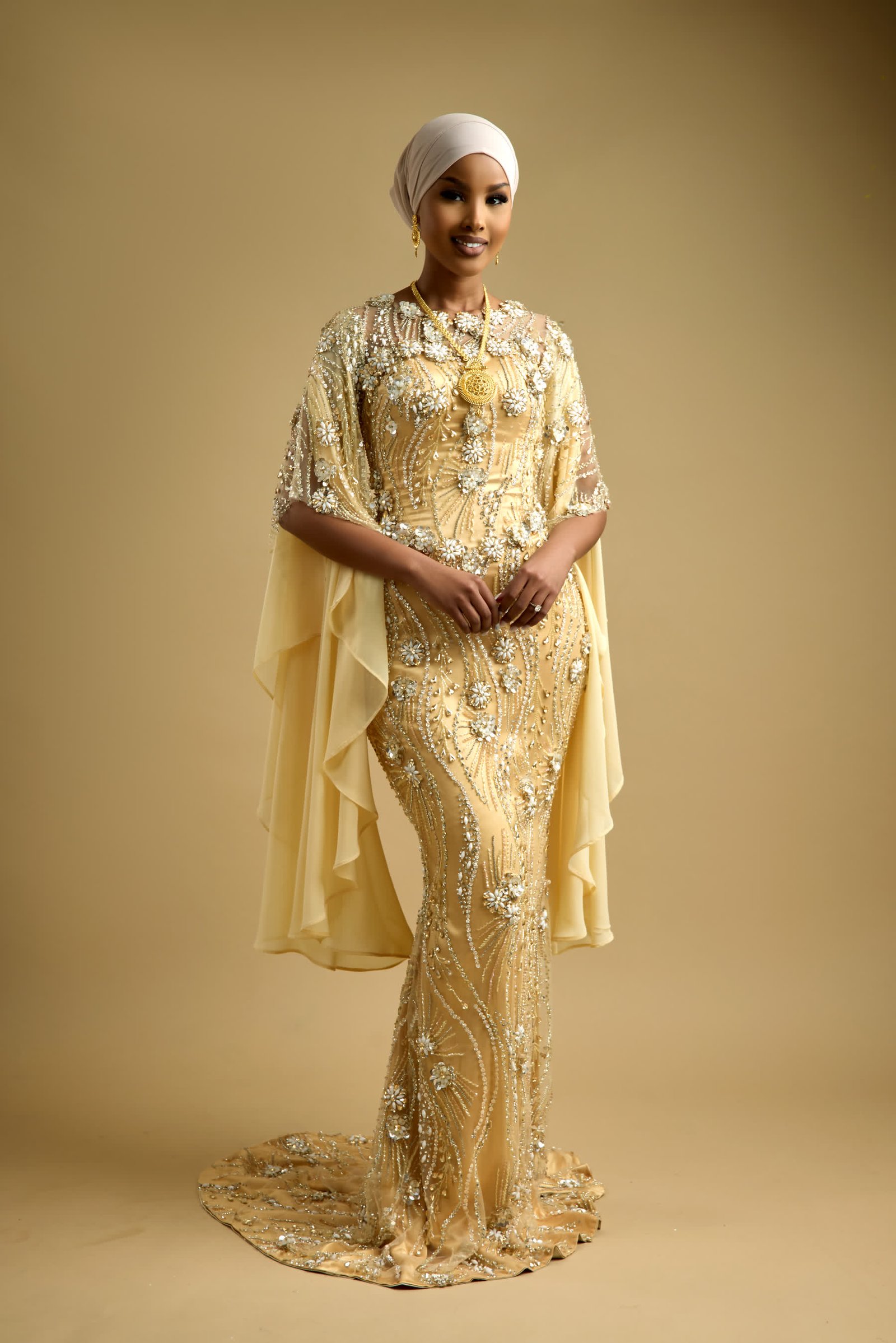
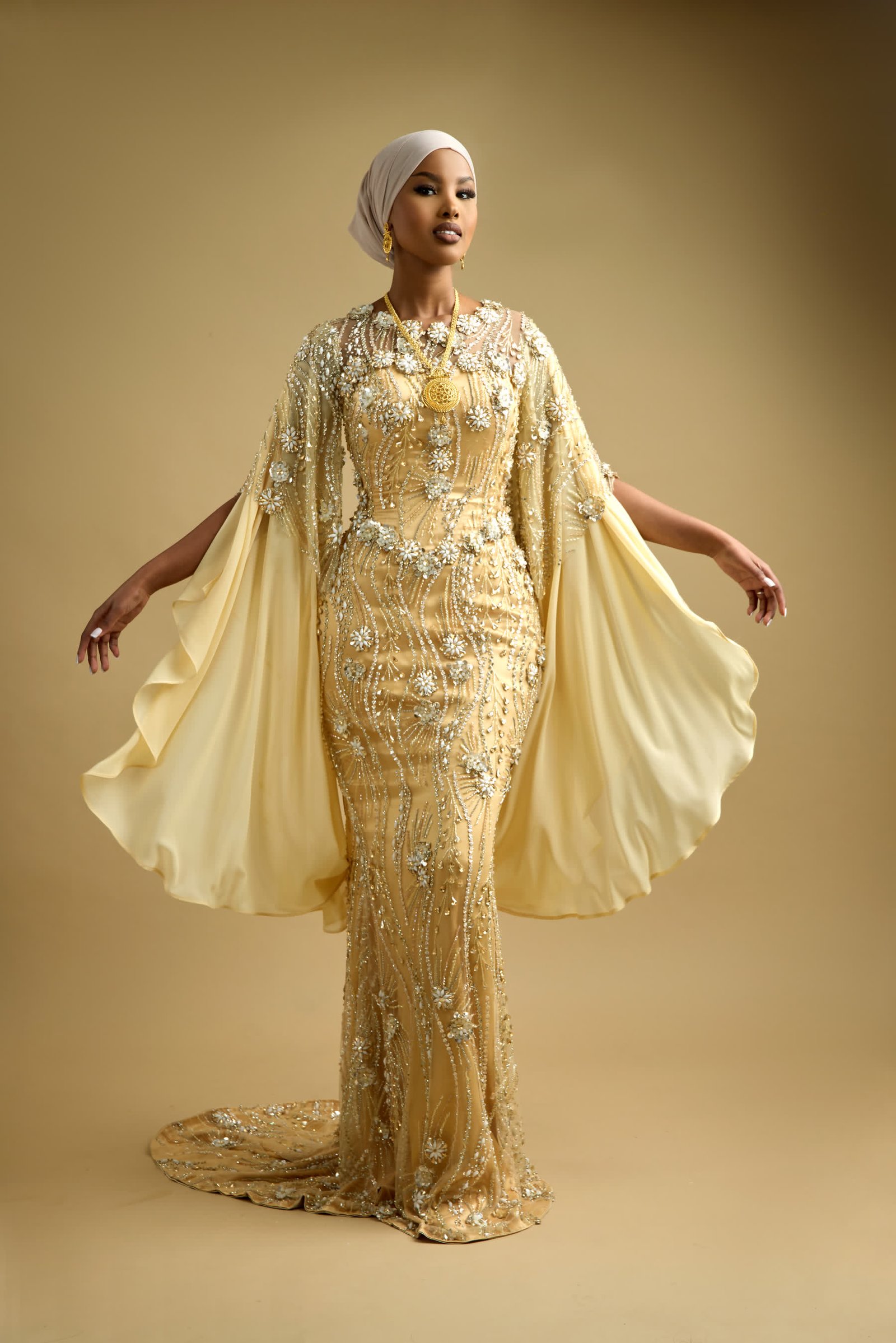
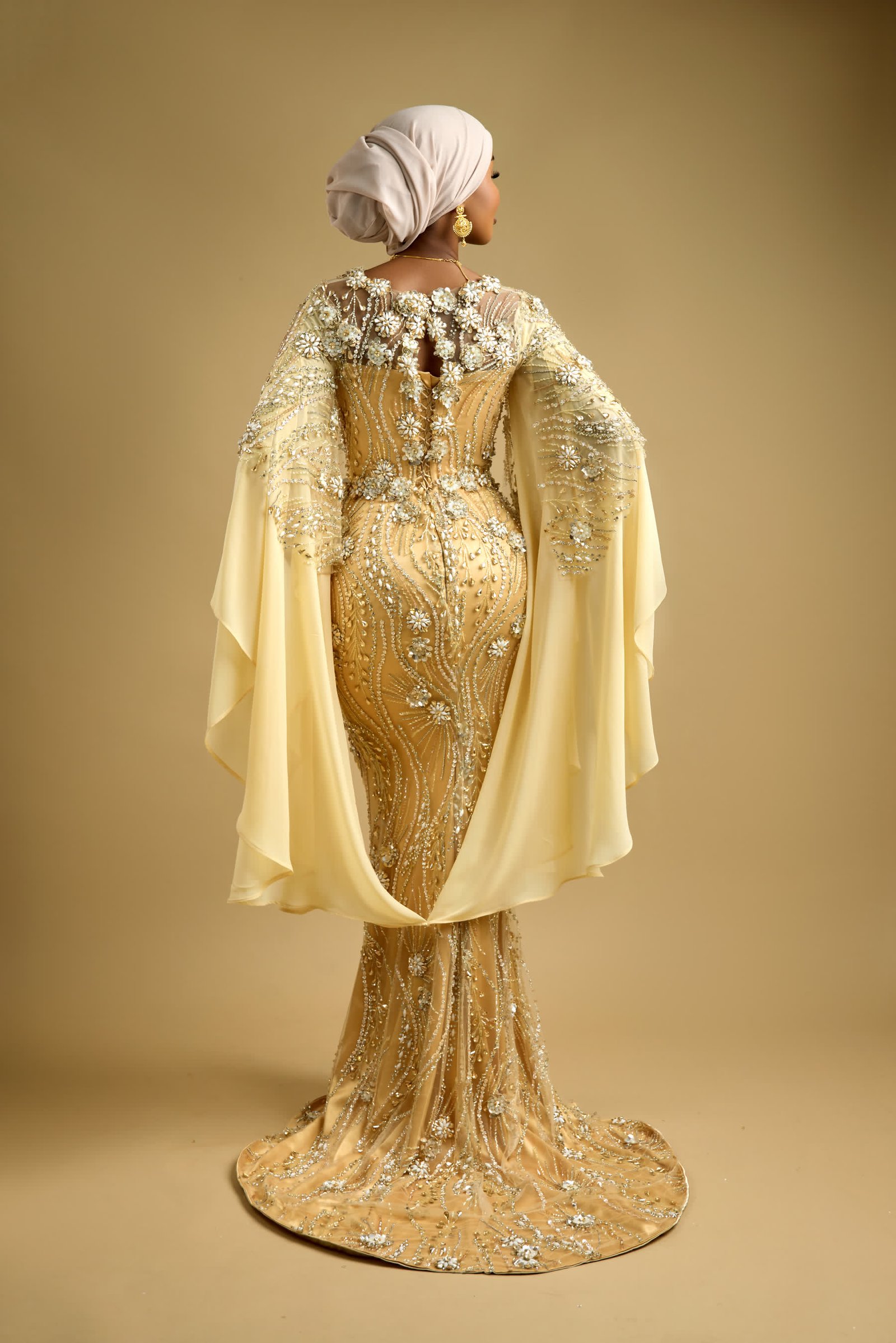
Hand-beaded gold on a floor-length column, with chiffon cape sleeves falling from the shoulder to the hem. Coverage through volume: the cape moves, the beadwork holds still.
03
The Heritage Edit
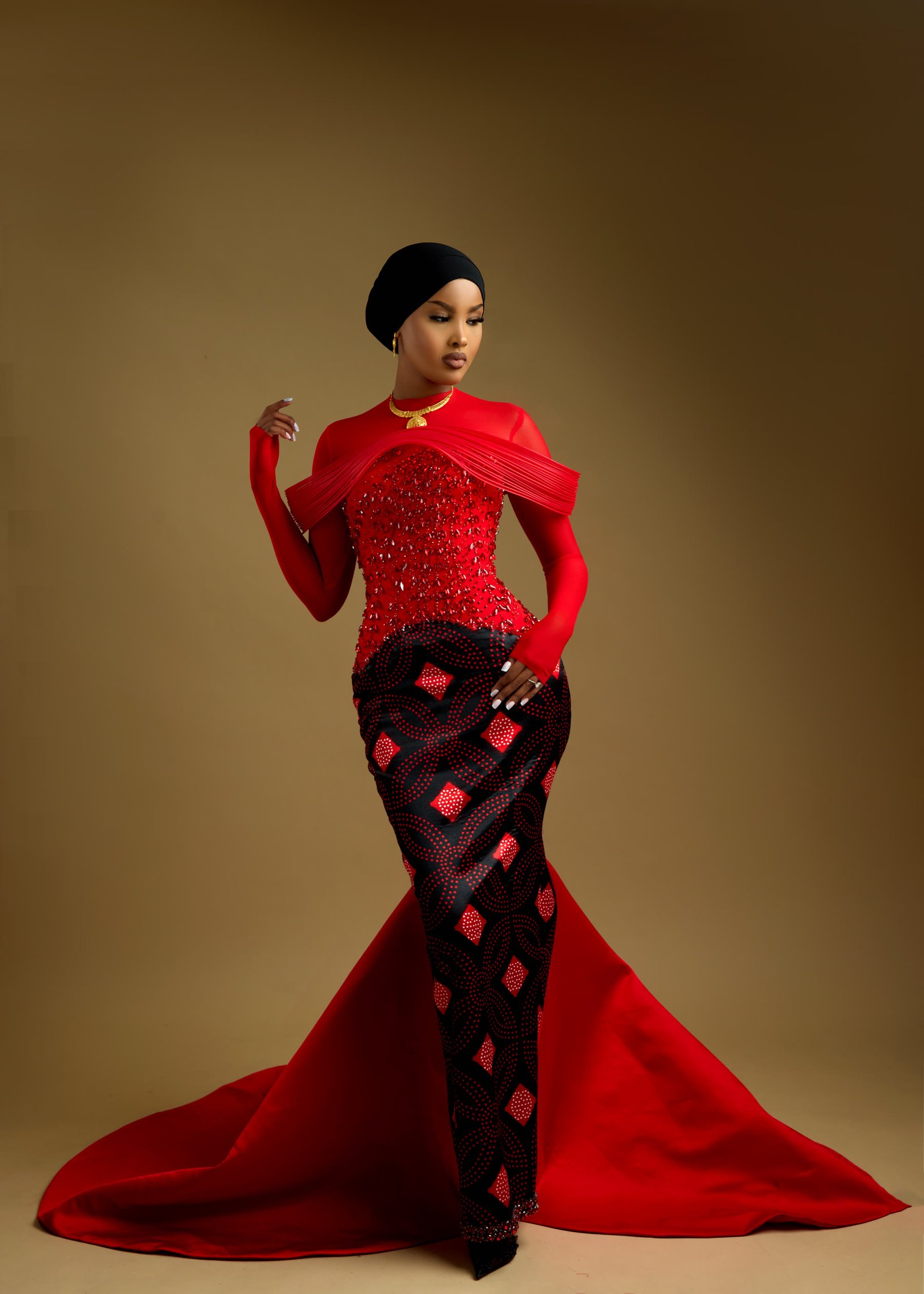
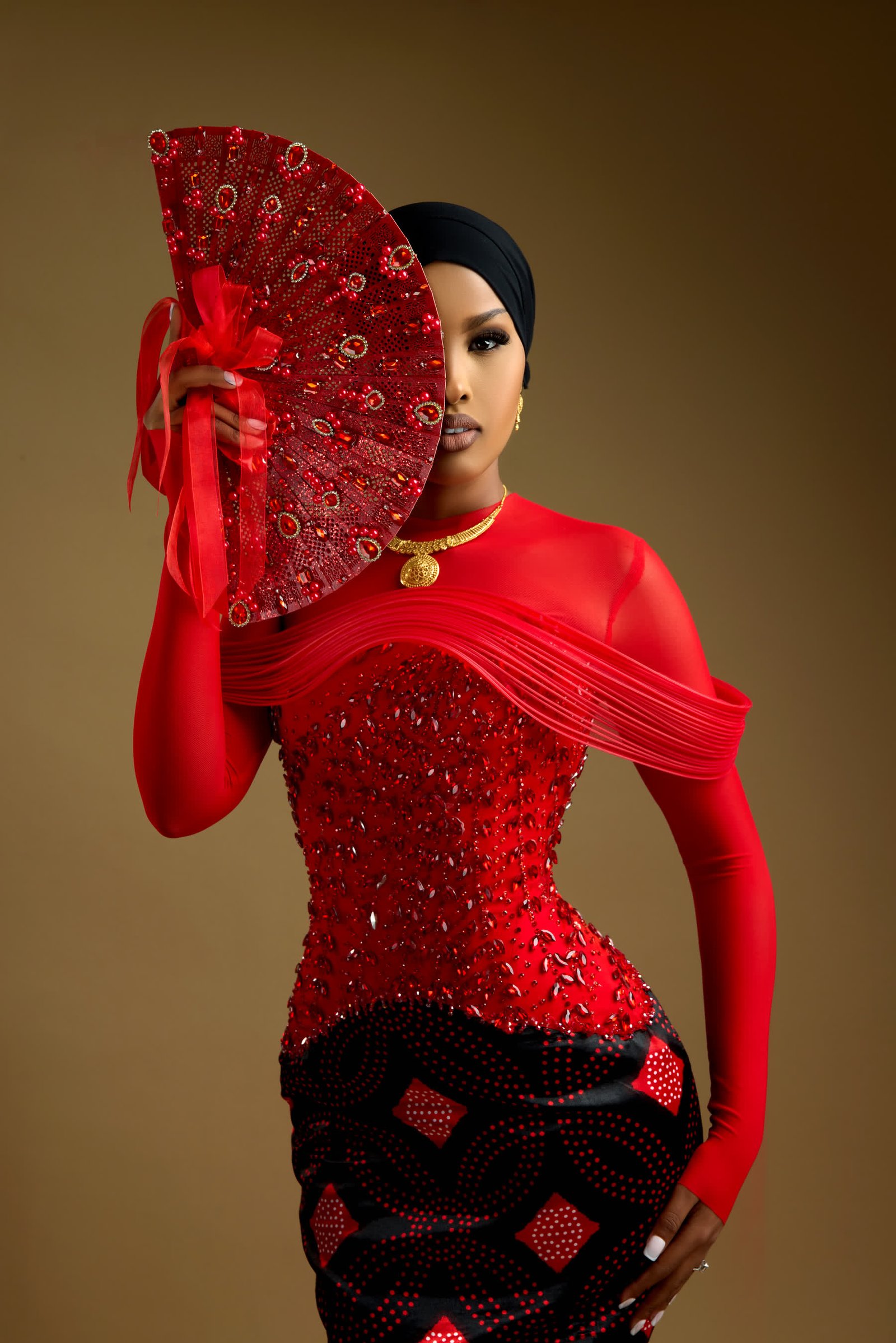
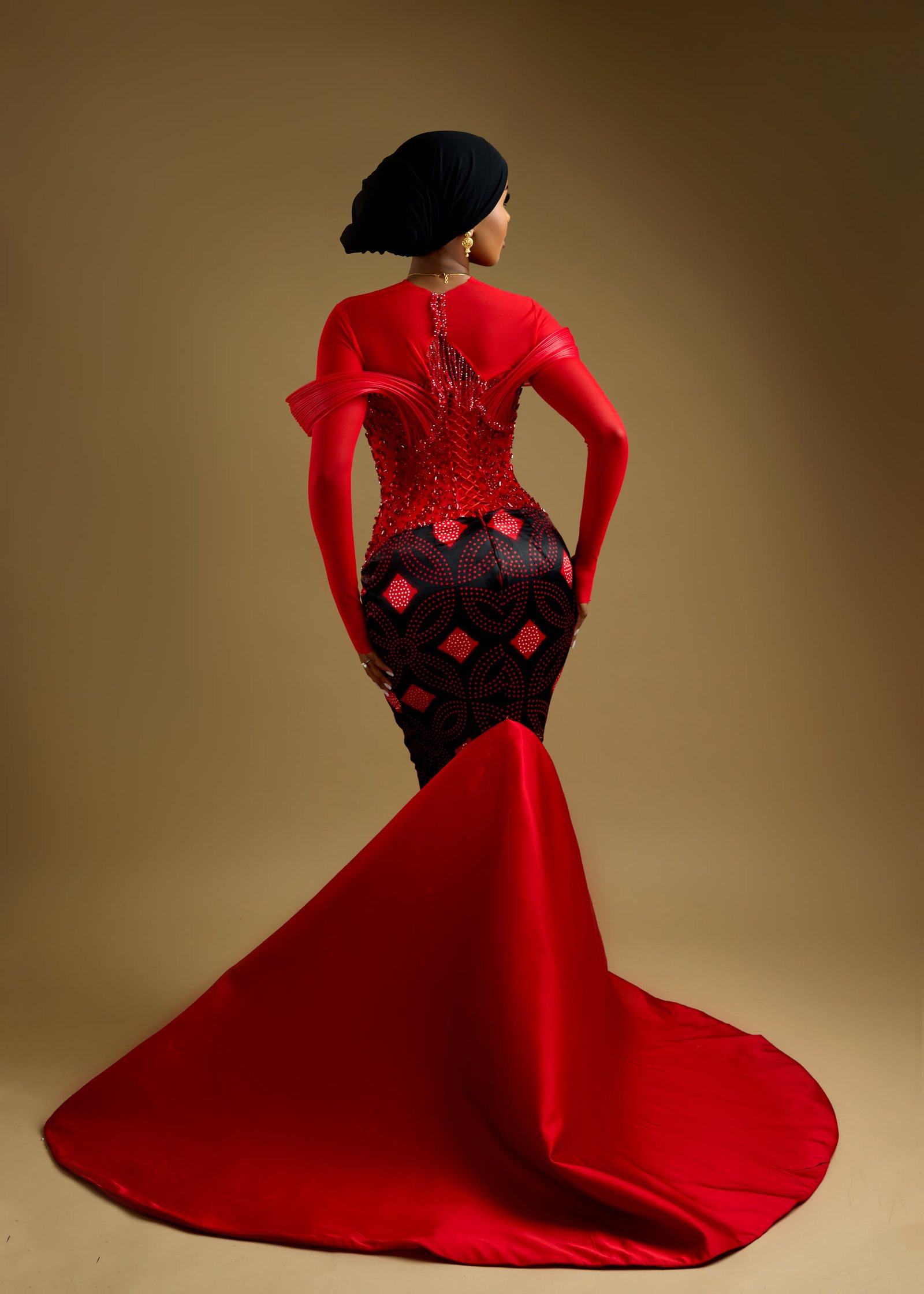
A scarlet long-sleeved bodice with draped shoulder detail, worn over a heritage print and finished with a sculpted train. Modest dressing and traditional dressing meeting in a single piece.
Head Covering
The Veil, the Hijab, and the Line Between
The head covering is not styled once the gown is finished. It is drawn at the same time, in the same conversation about fabric and proportion.
A veil worn over a hijab has to sit somewhere, and where it sits changes the whole proportion of the head and shoulders. So we resolve the two together: how the hijab is wrapped and pinned, where the veil is anchored, how much of the lace edge shows, and whether a headpiece is needed to hold it or the drape carries itself.
Hijab wrapping and pinning designed with the gown
Veils cut, edged and anchored to your proportions
Draping and layering resolved as one silhouette
Custom headpieces made in the gown’s own materials
Coordinated coverings where a party dresses together
The Commission
Crafted Around You
Nothing on this page was chosen from a rail. Every piece began as a conversation and a blank page.
A modest brief has more variables than an open one, and each of them is a decision we make with you rather than for you. How much coverage, in which fabric, held by structure or carried by volume, and how the covering reads with the rest. Those answers are different for every bride, which is why the gown is built rather than adjusted.
Bespoke consultation before anything is drawn
Fabric selection handled and compared in person
Custom silhouette developed from your measurements
Personal styling across gown, covering and accessories
Hand finishing on every seam, hem and closure
Individual design details drawn for one commission only
0%
Bespoke Fit
All
Cultures Welcomed
The Experience
Consultation to Final Reveal
Five stages, each one agreed with you before the next begins.
01
Consultation
The ceremony, the level of coverage you want, and what you already know you do not want.
02
Design Direction
Sketches, fabric and a covering approach narrowed to one agreed direction before anything is cut.
03
Fittings
A pattern drafted to your measurements, then fitted in stages with the sleeves and neckline settled first.
04
Refinement
Line, length and drape adjusted until the gown needs no correcting when you sit, stand or turn.
05
Final Reveal
The finished gown pressed, the covering styled with it, and the whole look seen together for the first time.
Bring us the level of coverage you want and we will draw the rest around it. Book four to six months in advance. Consultations are €50 per hour, deducted from your final order.